
Have you ever wondered why there are thousands of temples dedicated to Lord Shiva or Lord Vishnu, but almost none for Lord Brahma? As the Creator of the Universe in the Hindu Trinity, you’d expect him to have a shrine on every corner. Yet, the spiritual heart of his worship resides in one primary, ancient location: Pushkar, Rajasthan.
The Jagatpita Brahma Mandir is not just a building; it is a testament to a legendary past and a vibrant spiritual present. Whether you are a devoted pilgrim or a curious traveler, this temple offers a unique glimpse into the soul of India.

The Fascinating Legend of the Curse
The story of why this is the only major Brahma temple in the world is as dramatic as any Hollywood script. According to the Padma Purana, Lord Brahma descended to Earth to perform a sacred yagna (fire ritual) for the well-being of the world. He chose Pushkar because a lotus flower had fallen from his hand, creating three beautiful lakes.
However, the ritual required his wife, Savitri, to be by his side. When she was late for the auspicious moment, Brahma married a local girl named Gayatri to complete the ceremony. When Savitri arrived and saw another woman in her place, she was furious. She cursed Brahma, declaring that he would never be worshipped anywhere else on Earth except in Pushkar.
Architectural Splendor in the Heart of Rajasthan
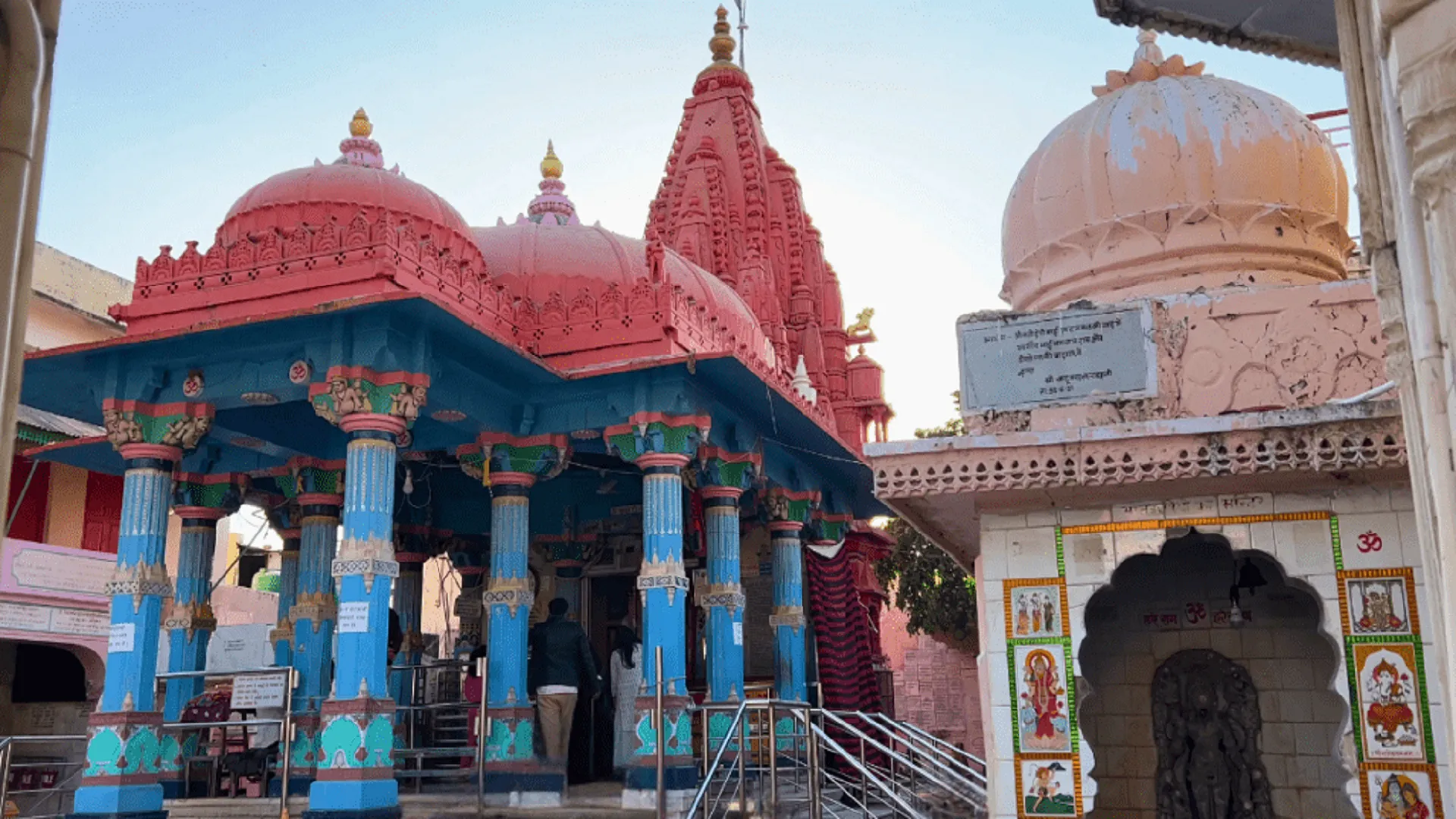
The Brahma Temple is a visual marvel that blends traditional Rajasthani style with ancient Hindu design. Though the site is thousands of years old, the structure you see today mostly dates back to the 14th century.
Read MoreGayatri Mata Temple Pushkar – A Guide to the Pap Mochani Hill...
- The Red Shikhara: You can spot the temple from a distance thanks to its bright red spire (pinnacle). It stands out against the blue sky as a symbol of divine energy.
- The Silver Gateway: As you enter, you pass through a magnificent silver door that leads to the main hall. Look closely at the floor and walls; you’ll see thousands of silver coins embedded there by devotees.
- The Four-Faced Idol: Inside the inner sanctum (Garbhagriha), you will find the life-sized statue of Lord Brahma. He has four faces and four arms, symbolizing his omnipresence and control over all directions.
The Spiritual Power of Pushkar Lake
No visit to the temple is complete without a stop at the Pushkar Lake. Surrounded by 52 bathing ghats, this lake is considered one of the five most sacred destinations for Hindus.
Devotees believe that taking a dip in these holy waters cleanses the soul of sins. During the month of Kartik Purnima (October/November), the town transforms. Thousands of people gather for the famous Pushkar Camel Fair, combining a vibrant cultural festival with a deep religious pilgrimage.
Planning Your Visit: Essential Details
If you’re ready to experience the magic of Pushkar, here is everything you need to know to plan your trip.
Best Time to Visit
The best weather is between October and March. The air is cool, and the desert sun is gentle. If you want to see the town at its most energetic, visit during the Pushkar Fair in November.
Temple Timings & Fees
- Morning: 5:30 AM to 1:30 PM
- Evening: 3:00 PM to 9:00 PM
- Entry Fee: Free (Open to everyone)
How to Reach
- By Train: The nearest major station is Ajmer, just 15 km away.
- By Road: You can easily catch a bus or hire a taxi from Jaipur (about 3 hours) or Udaipur.
Beyond the Main Temple: Other Sights
While the Brahma Temple is the star attraction, Pushkar has more treasures to offer:
- Savitri Temple: Located on a hilltop, it offers a breathtaking panoramic view of the entire city. You can hike up or take the ropeway.
- Varaha Temple: One of the oldest temples in town, dedicated to the boar incarnation of Lord Vishnu.
- Rangji Temple: A unique mix of Rajput and South Indian (Dravidian) architecture.
Pushkar is a place where time seems to slow down. From the scent of incense in the air to the sound of evening bells echoing across the lake, it is a destination that stays with you long after you leave.